


Cooking Over Fire
Slow food, open air, and the quiet rhythm of wood
There’s a certain kind of evening that only arrives in the warmer months. Light stretches longer. The air softens. Doors stay open. And somewhere outside, a fire is lit.
Not for heat alone — but for gathering, for cooking, for time well spent.
Across the UK, as spring leans into summer, gardens, patios and terraces become places to linger again. Fire pits are uncovered. Wood is stacked. Meals move outdoors.
Cooking over a wood fire isn’t new. It’s one of the oldest ways we know. But it feels especially relevant now — slower, more deliberate, and rooted in something real.
It asks you to pay attention.
To the flame…To the heat…To the moment.
And in return, it offers something simple: food that tastes better, and time that feels fuller.

The pull of the fire – A fire pit changes how people gather.
It draws people in. Creates a natural centre. There’s no rush. No strict timings. Just a shared space, built around warmth and light.
In the UK, where the weather can turn quickly, a fire extends the evening. It takes the edge off cooler nights. It makes outdoor spaces usable for longer — not just in peak summer, but through early spring and into autumn.
People settle in. Conversations stretch. Food becomes part of the experience, not just the outcome. You don’t need a full outdoor kitchen. A simple grill over flame is enough.
Flatbreads warmed on embers. Vegetables charred slowly. Fish wrapped and cooked in the heat of the coals. It’s instinctive. Uncomplicated. And deeply satisfying.

Cooking with wood
There’s a difference when you cook over wood. Gas is efficient. Charcoal is consistent. But wood brings character.
Different species burn differently. They smell different. They flavour food in subtle ways. Oak burns slow and steady. Birch lights quickly. Fruit woods add a gentle sweetness.
Cooking this way is less about precision and more about feel.
You learn the fire, you learn the heat zones, you learn when to wait.
And that process becomes part of the ritual. It slows everything down — in the best way.
The importance of good log storage
Behind every good fire is one simple thing: well-kept wood. It’s easy to overlook, but log storage shapes the entire experience. Poorly stored wood struggles to burn. It smokes. It wastes time.
Dry, seasoned logs make everything easier. Cleaner flames. Better heat. Better cooking. That’s where thoughtful log storage matters. Not just as a practical solution — but as part of the space itself.
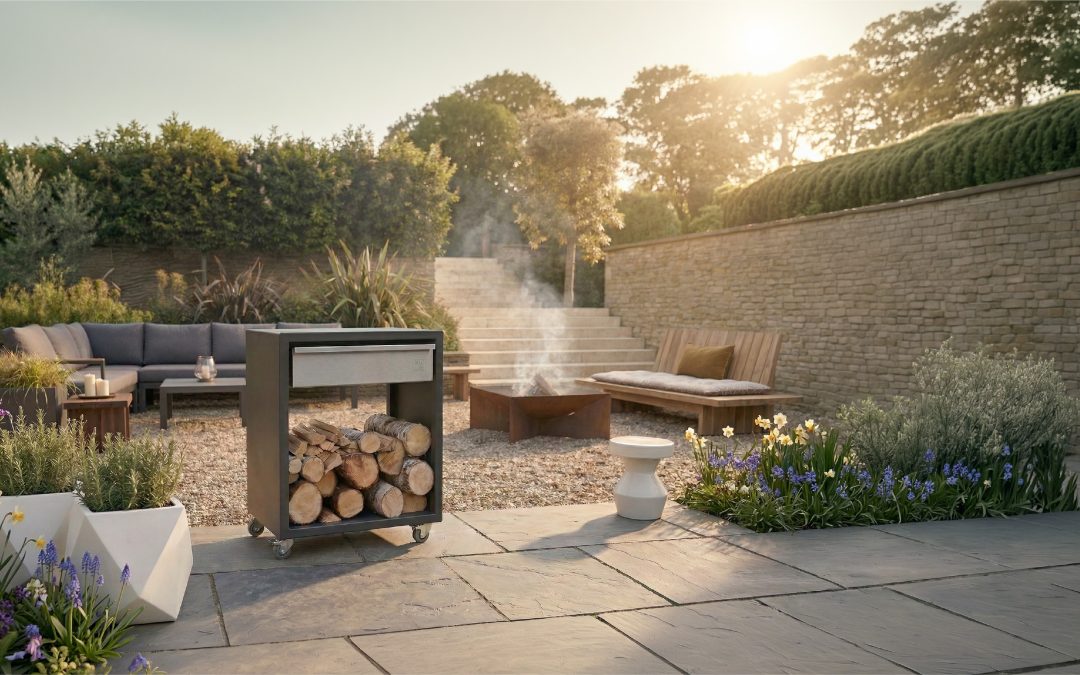
A well-designed log store keeps wood off the ground, allows airflow, and protects it from the worst of the British weather. Rain is inevitable. Damp is part of the climate. But good storage makes sure your logs are ready when you are. And when it sits within your garden or home, it should feel considered. Not hidden away.
Whether you’re stacking for aesthetics or efficiency, KUUB helps you keep your firewood exactly how it should be—dry, accessible, and beautifully stored.
indoor and outdoor living — a UK reality
In the UK, the line between indoors and outdoors is rarely fixed. A bright afternoon can turn cool by evening. A sunny day might end with rain. Spaces need to adapt. That’s why flexibility matters.
Log storage that works outdoors — but feels at home indoors — becomes part of how you live, not just something you use.
Bringing logs inside for a wood burner. Keeping a neat, accessible stack near a fire pit. Moving between spaces without friction.
It’s a small detail, but it changes the flow of a space. It reflects a broader shift — towards homes that are more connected to the outdoors, even in a climate that asks you to be prepared.
There’s a quiet satisfaction in order.
Logs stacked neatly, Kindling within reach, Everything in its place. It makes lighting a fire feel easy. Effortless.
A log store isn’t just functional. It becomes part of the setting — especially in outdoor spaces designed for gathering.
It sits alongside seating, fire pits, planting.

Fire, food, and time together
What draws people back to fire cooking isn’t just the food. It’s the pace.
In a world that often feels rushed, cooking over a fire asks you to slow down. To stay present. To share the process.
Friends gather not just to eat, but to be part of it.
Passing ingredients. Turning food. Watching the flames. There’s a natural rhythm to it.
that rhythm creates connection — to people, to place, to the moment itself.